


Spinal osteochondrosis is a degenerative disease of the spine (i.e., associated with the progressive destruction of tissue and disruption of its function).The main changes are related to the intervertebral discs (elastic structures located between the vertebrae that act as shock absorbers and reduce the impact and vibration of the vertebrae relative to each other when walking).With osteochondrosis, the intervertebral discs become stiff, hard, and often bulge into the spinal canal, compressing the spinal cord itself or its roots, causing corresponding discomfort (pain in the arms and legs, back, numbness of the skin on the extremities).
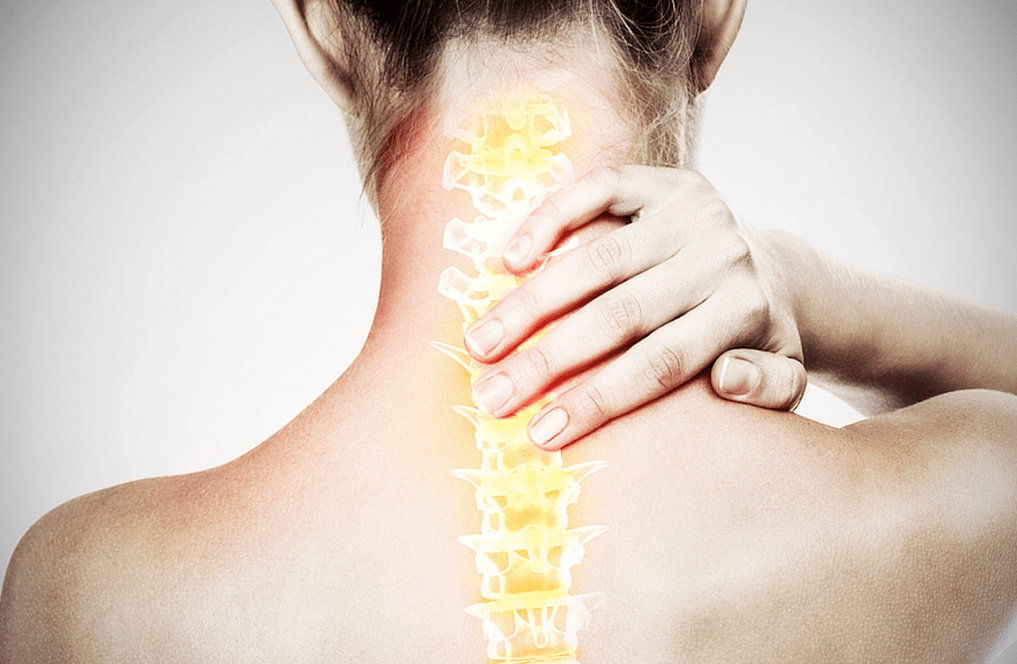
Symptoms of spinal osteochondrosis
- Back and neck pain: especially at night, after physical activity.
- Pain and tension in certain muscles in the back.
- Numbness of the skin on the arms or legs (fingertips or separate bands on the skin).
- Weakness in the arm or leg muscles.
- Muscle atrophy (thinning) in the arms and legs.
- Dizziness, headache: When the vertebral arteries supplying the brain become compressed between the cervical vertebrae.
sheet
- Depending on the area of the spine where the changes are greatest, the following forms of spinal osteochondrosis can be distinguished:
- Cervical osteochondrosis;
- Thoracic osteochondrosis;
- Lumbar osteochondrosis.
- Depending on the structural changes that occur in the intervertebral disc, the elastic structure located between the vertebrae, spinal osteochondrosis can be divided into the following stages:
- The first stage: the intervertebral disc core (the dense structure in the center) moves into the edge of the intervertebral disc;
- Stage 2: Cracks appear in the annulus fibrosus (composed of connective tissue) of the intervertebral disc, causing spinal instability (hypermobility);
- Stage 3: The intervertebral disc completely ruptures and prolapses into the spinal canal in the form of a hernia, which may compress the spinal cord root;
- Stage 4: Significant changes occur not only in the intervertebral disc, but also in the surrounding tissue (overgrowth of bone tissue, strong pathological fixation of the vertebrae to each other).
reason
- Excessive pressure on the spine:
- Occupational hazards: heavy object handling (such as loaders), long-term work in static (unmoving) positions;
- Being overweight increases the load on the spine;
- Lifting an object that is too large (overweight).
- Spinal injuries: fractured vertebrae, ruptured ligaments.
- Genetic causes: The tendency for the nutrition of the vertebrae and their surrounding tissues (ligaments, intervertebral discs) to gradually deteriorate.
diagnosis
- Chief complaint and medical history analysis:
- How long ago did you first experience back pain, numbness in your fingers and toes, and other discomfort?
- Both work and household activities are associated with lifting heavy objects and holding the back and neck in immobile positions for long periods of time (sitting at a desk, etc.).
- Neurological examination: Look for signs of neurological disease (impaired sensitivity in the arms or legs, curvature of the spine, pain when feeling the muscles in the back and neck).
- Spinal X-ray: This method allows you to study the structure of the spine in one or more planes, detecting thinning of the intervertebral discs (the elastic structures located between the vertebrae), herniation of the discs into the spinal canal, and marginal growth of spinal bone tissue (osteophytes), which are the result of spinal dystrophies that can damage the spinal roots, causing pain and sensitivity disorders.
- Spinal CT (Computed Tomography) and MRI (Magnetic Resonance Imaging) of the cervical spine and spine area: The structure of the spine and surrounding tissues (discs, ligaments) can be studied layer by layer and the presence and size of thinning of the discs, herniations (herniations) of the discs can be detected.
Treatment of spinal osteochondrosis
- Limit the load on the spine (do not lift heavy objects).
- Properly distribute the load on your spine: For example, instead of using one handbag, use two handbags to make the load more even.
- Massage the back and neck area.
- Physical therapy: A series of exercises to strengthen the muscles of the spine.
- swim.
- Acupuncture: Injections using special small needles to affect the local process of tissue destruction in the disc.
- Painkillers.
- Medications to reduce muscle tension (muscle relaxants).
- In advanced processes (the hernia prolapses and compresses the spinal roots), surgical treatment (disc removal, immobilization of the affected spinal part).
Complications and consequences
- Chronic back pain.
- Paralysis (weakness in the arms or legs).
- Poor cerebral circulation (when the vertebral arteries supplying the brain become compressed between the cervical vertebrae).
Prevention of spinal osteochondrosis
- Gentle working style: moderate weight lifting, refusal to lift excessively heavy objects, regular changes in physical and mental work ("stretching" of the spine).
- Active leisure activities.
- Gymnastics, morning exercises: daily simple exercises involving the spine (trunk rotation, slight bending).